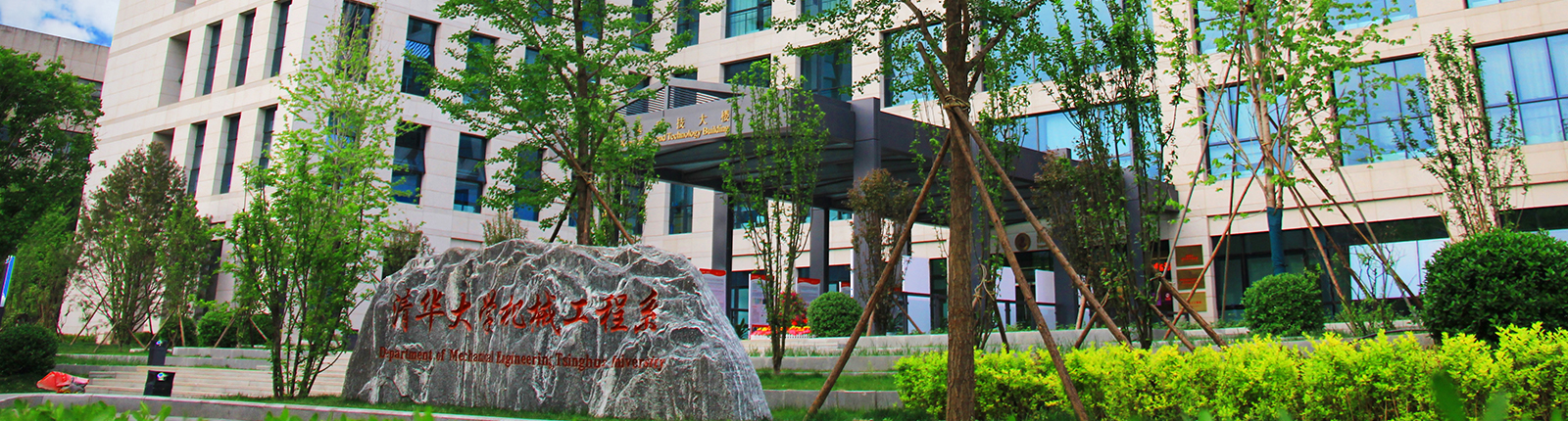
On October 12, the 2026 Asia Mechanical Engineering Leaders Meeting took place at the Lee Shau Kee Science and Technology Building, Tsinghua University.
Hosted by the Department of Mechanical Engineering, Tsinghua University, the summit served as the opening event of the department’s 2026 International Academic Week “FUTURE DESIGN & MANUFACTURING 2026”. It brought together deans and academic leaders from 14 top-tier mechanical engineering schools across six countries and regions: China, Singapore, the Republic of Korea, Thailand, Indonesia and Malaysia. Participating prestigious universities included Tsinghua University, Nanyang Technological University, National University of Singapore, Seoul National University, Korea Advanced Institute of Science and Technology (KAIST), The Hong Kong University of Science and Technology, Yonsei University, Chulalongkorn University, Bandung Institute of Technology, University of Malaya, Universiti Teknologi PETRONAS, Shanghai Jiao Tong University, Xi’an Jiaotong University and Zhejiang University, among other domestic and overseas institutions.
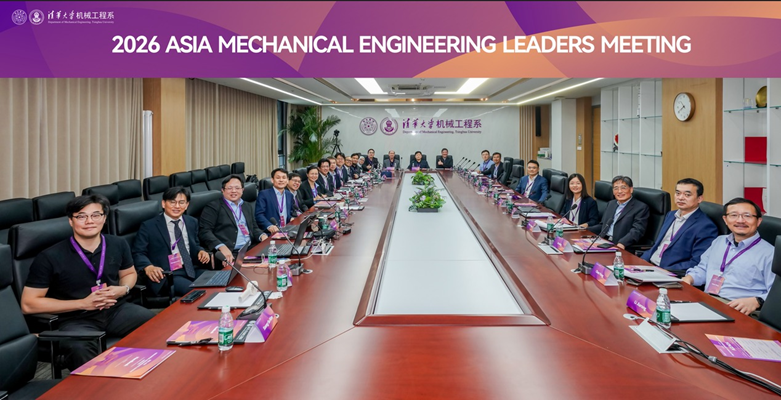
The Asia Mechanical Engineering Leaders Meeting was jointly initiated by the Department of Mechanical Engineering at Tsinghua University and the School of Mechanical and Aerospace Engineering at Nanyang Technological University. It aims to build a high�level exchange platform for heads of mechanical engineering schools from leading Asian universities, so as to jointly address profound transformations driven by artificial intelligence and sustainable development. The inaugural summit was successfully held in Singapore in 2025, with Professor Yeong Wai Yee, Dean of the School of Mechanical and Aerospace Engineering at Nanyang Technological University, serving as its chair. This year’s second round moved to Beijing, chaired by Professor Zhou Ming, Head of the Department of Mechanical Engineering, Tsinghua University. It centered on two core themes: AI-Empowered Talent Development and Innovation in Mechanical Engineering and Future-Oriented Mechanical Engineering Education: Challenges and Opportunities.
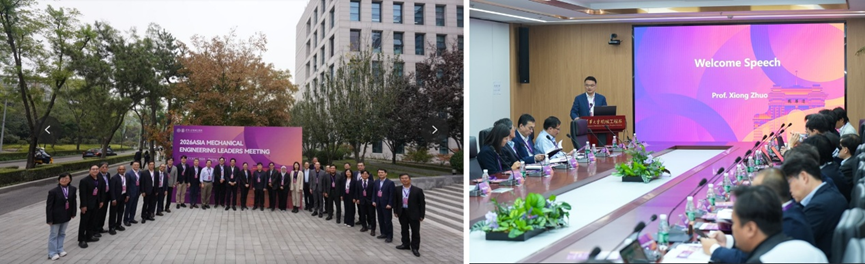
The conference started at 9:00 a.m. Professor Xiong Zhuo, Party Secretary of the Department,delivered the welcome address on behalf of the host. He pointed out that artificial intelligence and sustainable development are profoundly reshaping engineering research, education and manufacturing industries. Modern manufacturing is becoming intelligent, interconnected, customized and autonomous. Intensified admission competition and the mismatch between traditional curricula and industrial upgrading represent shared challenges for mechanical engineering education across Asia. “No single university can tackle these challenges on its own. Sincere academic friendship and mutual trust constitute the solid foundation for long-term collaboration.”
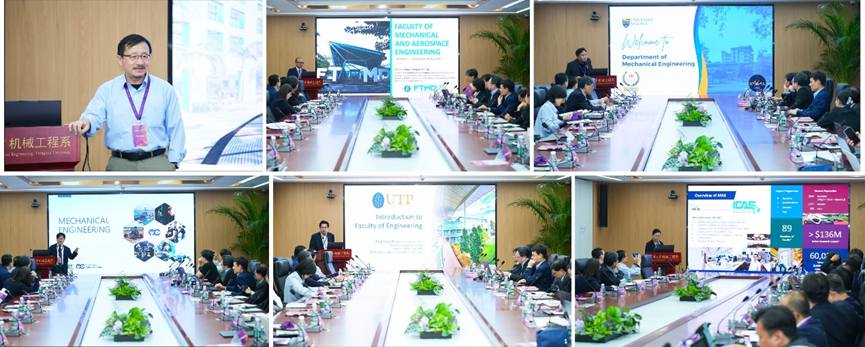
The subsequent institutional introduction and thematic report session featured substantial sharing. The Department of Mechanical Engineering, Tsinghua University demonstrated its profound legacy through historic breakthroughs including China’s first numerically-controlled milling machine and first lithography machine, as well as its faculty strength of 415 staff members. It presented curricula featuring deep interdisciplinary integration of mechanical engineering with information science, energy science and medicine. Professor Chen Yong, Head of the Department of Mechanical and Aerospace Engineering at the Hong Kong University of Science and Technology, introduced its balanced layout covering mechanical and aerospace disciplines, together with strategic priorities such as energy systems, intelligent manufacturing and advanced materials. Representatives from Nanyang Technological University showcased its latest progress in industrial artificial intelligence, new-energy technologies and the newly-established undergraduate robotics program. Leaders from the National University of Singapore, Seoul National University and other universities also shared their institutional disciplinary planning and talent�training reforms for the AI era, sparking lively discussions among participants.
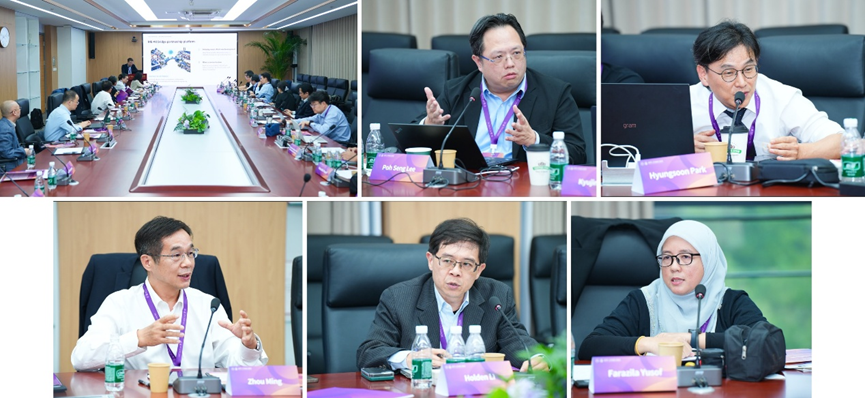
In the afternoon, the thematic session Future‑Oriented Mechanical Engineering Education: Challenges and Opportunities was moderated by Professor Wen Peng, Deputy Head of the Department. In‑depth exchanges were carried out among department heads on shifting admission trends, curriculum reform and interdisciplinary development. Nanyang Technological University reported its disciplinary adjustments, including the new robotics undergraduate track and its focus on industrial artificial intelligence and new‑energy technologies. KAIST presented its four key disciplinary clusters: mechanics‑materials‑manufacturing, robotics‑mobility‑control, energy‑environment‑ocean engineering, and medical nano‑optics, alongside its industry‑education collaboration mechanisms. Shanghai Jiao Tong University introduced its “4+9+AI” curriculum framework and its global‑oriented Capstone projects. Representatives from Zhejiang University, Xi’an Jiaotong University, University of Malaya, Bandung Institute of Technology and other universities also shared practices and insights on updating curricula to keep pace with industrial transformation and align training schemes with student needs.
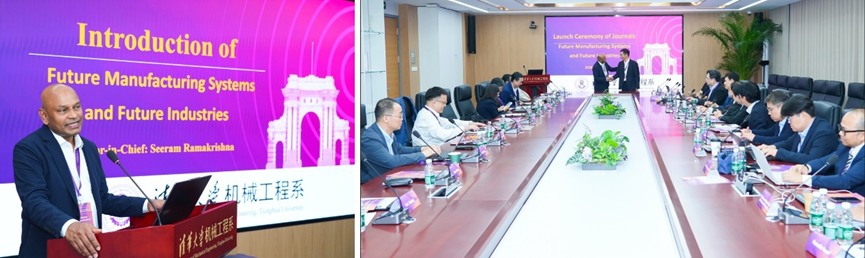
During the summit, a launch ceremony was held for two new English�language academic journals in mechanical engineering: Future Manufacturing Systems and Future Industries. The ceremony was chaired by Professor Ma Liran, Deputy Head of the Department. Academician Seeram Ramakrishna, Editor-in-Chief, and Professor Zhou Ming, Executive Editor-in-Chief, jointly cut the ribbon for the new journals. Academician Seeram Ramakrishna elaborated on the journals’ founding background and vision. Future Manufacturing Systems will publish original, far-reaching fundamental research outcomes in manufacturing system domains to advance global future manufacturing. Future Industries focuses on frontier science across multiple engineering disciplines, providing a rigorous, professional and forward�looking international academic exchange platform for fast�growing industry sectors. This was followed by a round-table discussion moderated by Academician Seeram Ramakrishna, where deans offered suggestions regarding journal positioning, academic ecosystem and potential cooperation opportunities, extending best wishes for the journals’ successful publication.
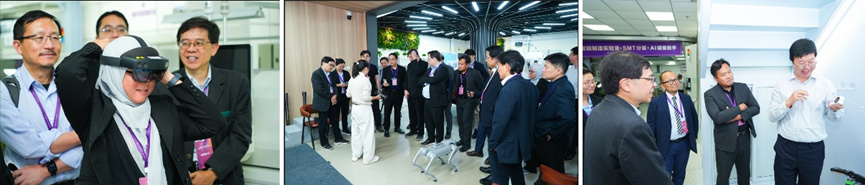
Following the closing session, delegates visited Tsinghua iCenter (Basic Industrial Training Center). Covering traditional manufacturing processes as well as advanced manufacturing scenarios such as additive manufacturing and intelligent assembly, the iCenter’s “learn-by-doing, innovate-while-learning” practical engineering education system offered international delegates first-hand insight into how Tsinghua fosters students’ innovation and hands-on capabilities, opening new avenues for practical engineering-education partnerships among universities. A welcome dinner was hosted at the Jiasuo Guest House in the evening, where participants continued their exchanges in a relaxed atmosphere.