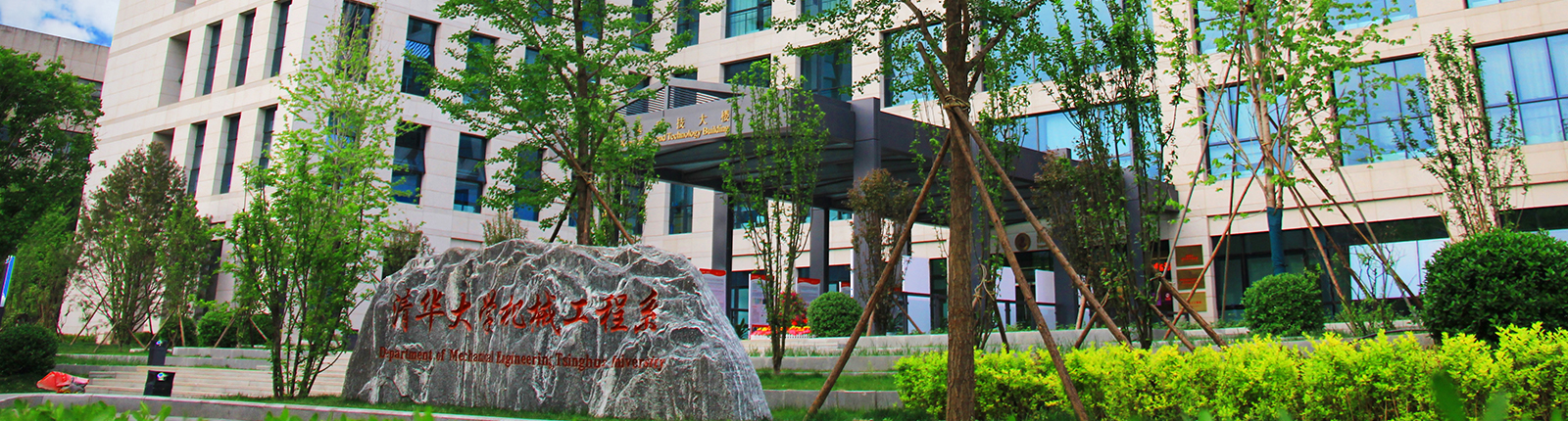
From October 12 to 15, the Department of Mechanical Engineering at Tsinghua University successfully held its 2026 International Academic Week “FUTURE DESIGN & MANUFACTURING 2026”.
Themed "Future Design and Manufacturing," the Academic Week featured a series of events, including the 2026 Asia Mechanical Engineering Leaders Meeting, a launch ceremony for two new scientific journals, a signing ceremony for a double-degree agreement between China and the Republic of Korea, and three international sub-forums on material forming and manufacturing, mechanical design, and physical AI-empowered manufacturing. Scholars and industry experts from universities in Asia and Europe gathered at Tsinghua's campus to discuss the future development and talent cultivation in the field of mechanical engineering.
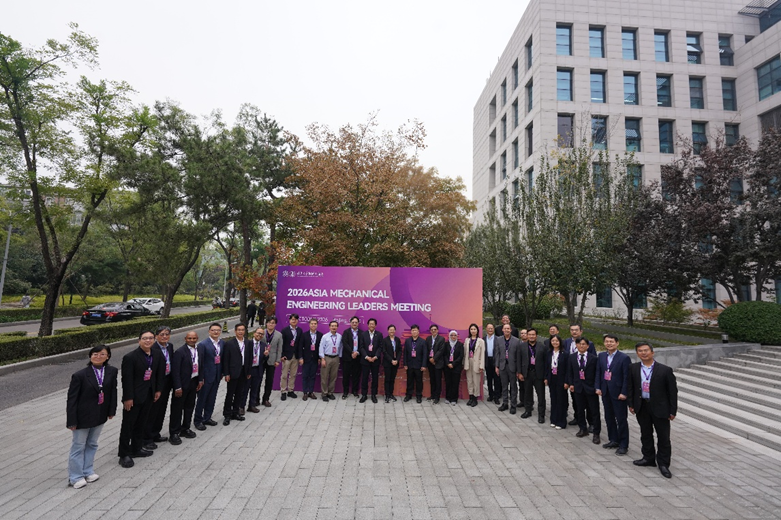
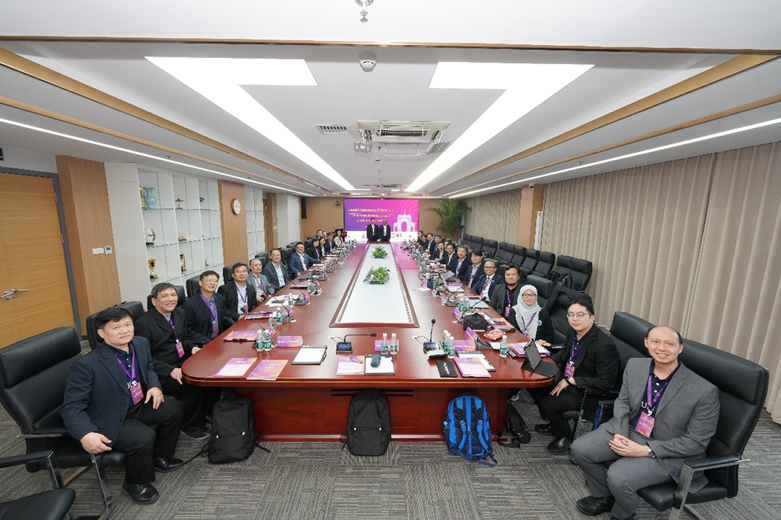
On the morning of October 12, the 2026 Asia Mechanical Engineering Leaders Meeting was held at the Lee Shau Kee Science and Technology Building, marking the opening of the Academic Week. The meeting brought together deans, department chairs, and academic leaders in mechanical engineering from 14 universities across six countries and regions: China, Singapore, the Republic of Korea, Thailand, Indonesia, and Malaysia. The opening ceremony was moderated by Professor Zhao Huichan of the Department of Mechanical Engineering, and Professor Xiong Zhuo, Party Secretary of the Department, delivered a welcome address on behalf of the department. Representatives of the participating universities introduced their curricula and institutional characteristics one by one. During two thematic sessions, "AI-Empowered Talent Cultivation and Innovation in Mechanical Engineering" and "Future-Oriented Mechanical Engineering Education: Challenges and Opportunities," representatives engaged in in-depth exchanges on topics such as reform of talent cultivation models, curriculum innovation, enrollment trends, and interdisciplinary integration. After the meeting, the delegates visited the Tsinghua iCenter.
That same afternoon, the Department held a launch ceremony for two new English-language scientific journals, Future Manufacturing Systems and Future Industries. The ceremony was moderated by Professor Ma Liran, Deputy Head of the Department, and Academician Seeram Ramakrishna, Editor-in-Chief of the journals, and Professor Zhou Ming, Executive Editor-in-Chief and Head of the Department, cut the ribbon for the new journals. Academician Seeram Ramakrishna introduced the background and vision behind the two journals: the former will reflect original and far-reaching fundamental research in the field of manufacturing systems, while the latter will focus on frontier science across multiple engineering disciplines and serve international academic exchange in rapidly growing industrial sectors. On the same day, the Department of Mechanical Engineering at Tsinghua University and the Department of Mechanical Engineering at the Korea Advanced Institute of Science and Technology (KAIST) signed a double-degree joint training agreement. At the signing ceremony, Professor Zhou Ming, Head of the Department, and Professor Hyung-Soon Park, Head of the KAIST Department of Mechanical Engineering, signed the agreement on behalf of the two parties. The signing marks an important milestone in deepening cooperation between the two departments, will provide students of both universities with a high-quality international training pathway, and will further expand the depth and breadth of the Department's cooperation with the Republic of Korea.
On October 13, the International Symposium on the Future of Material Processes was held in Room A404 of the Lee Shau Kee Science and Technology Building. Experts from domestic and international universities and research institutions—including Nanjing University of Science and Technology, Northwestern Polytechnical University, Nanyang Technological University, The Hong Kong Polytechnic University, Huazhong University of Science and Technology, Tianjin University, the Second Academy of CASIC, and the Chinalco Research Institute of Science and Technology—delivered nine keynote reports on frontier directions in material forming and manufacturing. Topics covered ultra-large-scale lattice structure design and manufacturing, the global landscape and future development of additive manufacturing, nanoprecipitation-strengthened ultra-high-strength high-entropy alloys, intelligent welding and evaluation, advanced cold spray solid-state additive manufacturing and repair, and advanced aluminum alloy materials and applications for new energy vehicles. The symposium also included a laboratory visit session.
On October 14, the forum themed "Design for Future" was held in Room A404 of the Lee Shau Kee Science and Technology Building. Professor Liu Xinjun moderated the opening ceremony, and Academician Luo Jianbin delivered the opening address. The day featured eleven keynote reports, in which scholars from Harbin Institute of Technology, Jilin University, Beihang University, Shanghai Jiao Tong University, Zhejiang University, Tsinghua University, and the Universidad de los Andes in Colombia shared their latest findings on frontier topics such as mobile robots for complex terrain, functionalized micro/nano-bionic surfaces, 3D bioprinting, embodied intelligence in soft robotics, aero-hydrodynamic seals, magnetorheological (magnetic fluid) sealing technology, and wearable robots, building a multidisciplinary exchange platform spanning mechanics, bionics, materials, biology, and aeronautics.
On October 15, the Forum "Physical AI-Empowered Manufacturing" was held. Co-hosted by the Department's Institute of Manufacturing Engineering and Institute of Mechatronics, the forum centered on the theme "Exploring Physical AI-Empowered Manufacturing Technologies" and featured eight keynote reports along with laboratory visits. Experts from universities in China, France, Singapore, Indonesia, and Hong Kong (China) explored the development and application of robotics-related physical foundations and artificial intelligence technologies in the context of intelligent manufacturing scenarios.
This International Academic Week represents an important initiative by the Department of Mechanical Engineering to advance its globalization strategy for talent cultivation and deepen international research cooperation. The successful series of events comprehensively showcased the Department's latest progress in discipline development, international exchange, and journal construction, laying a solid foundation for further expanding global partnerships and enhancing the discipline's international influence.